How often can you use nasal spray? It depends which kind
Decongestant sprays stop at three days. Saline can be used freely. Steroid sprays are for every day. The rules for each kind of nasal spray, from the labels.
By the HEALTHORA team · 10 March 2026 · 6 min read
First, which kind of spray is it?
The box tells you in the "Active ingredient" line, or in its absence. Four kinds cover almost everything on the shelf:
- Decongestant sprays: the active ingredient is oxymetazoline or phenylephrine. Brands include Afrin, Vicks Sinex, Sudafed OM and store-brand "12-hour" sprays.
- Saline sprays and rinses: salt water, with no active drug. Sprays, mists, squeeze bottles and neti pots.
- Steroid sprays: fluticasone, triamcinolone, budesonide or mometasone. Flonase, Nasacort, Rhinocort and their store brands.
- Antihistamine sprays: azelastine, sold over the counter in recent years, and prescription versions.
A fifth group has no drug listed at all: non-medicated sprays built on menthol, essential oils or herbal blends, sold for comfort rather than to treat a condition. Each kind has its own rule about frequency, and they are very different.
Decongestant sprays: twice a day, three days at most
Oxymetazoline and phenylephrine sprays shrink the swollen blood vessels in the lining of the nose, which is why they work within minutes. The label for a 0.05% oxymetazoline spray says no more often than every 10 to 12 hours, no more than two doses in 24 hours, and no more than three days in a row.
The three-day rule is the one that matters. Used longer, the blood vessels start to over-widen as each dose wears off, the nose feels more blocked than before, and the spray becomes the only thing that seems to help. Doctors call this rebound congestion or rhinitis medicamentosa, and getting out of it means a few uncomfortable days without the spray, ideally with a pharmacist’s or doctor’s advice on how.
Saline: as often as you like, with the right water
Saline has no drug in it, so there is no dose and no rebound. A saline spray can be used several times a day to loosen mucus and moisten a dry lining, and MedlinePlus lists it among the first things to try for a stuffy nose. Sprays and mists from the pharmacy are sterile in the container.
A rinse, with a squeeze bottle or neti pot, needs more care, and the care is about the water, not the salt. FDA’s advice is to use only distilled or sterile water, tap water boiled for three to five minutes and cooled to lukewarm, or water passed through a filter designed to trap infectious organisms. Tap water is safe to drink because stomach acid kills what is in it; the nose has no such defence, and rare but serious infections have followed rinsing with it. Wash the device after each use and let it dry completely.
Steroid sprays: once a day, every day, for the season
Fluticasone and the other steroid sprays work on inflammation rather than on blood vessels, which changes everything about how they are used. They do little on the first spray; some improvement may come within a day or two, and the full effect takes longer. They are meant to be used regularly, usually once a day in each nostril for the over-the-counter products, for as long as the allergy or the season lasts.
Because they are not decongestants, they do not cause rebound congestion and have no three-day limit. They are also not for a cold. Over-the-counter labels do set limits for children, because long daily use can slow growth: a doctor should be involved if a child aged 2 to 11 needs it for more than two months a year, or a child 12 and over for more than six.
Antihistamine sprays
Azelastine and its relatives block histamine in the lining, for allergy symptoms such as sneezing, itching and a runny nose. They are typically used once or twice a day and, like steroid sprays, are designed for regular use through an allergy season rather than for a cold. Follow the label of the product you have; the over-the-counter and prescription strengths differ.
Non-medicated menthol and herbal sprays
With no decongestant in them, these sprays have no rebound effect and no three-day rule: menthol acts on the cold-sensing nerves in the nose, not on blood vessels, so there is nothing to over-widen when it wears off. Frequency is whatever the carton says, and the carton is also where the cautions live.
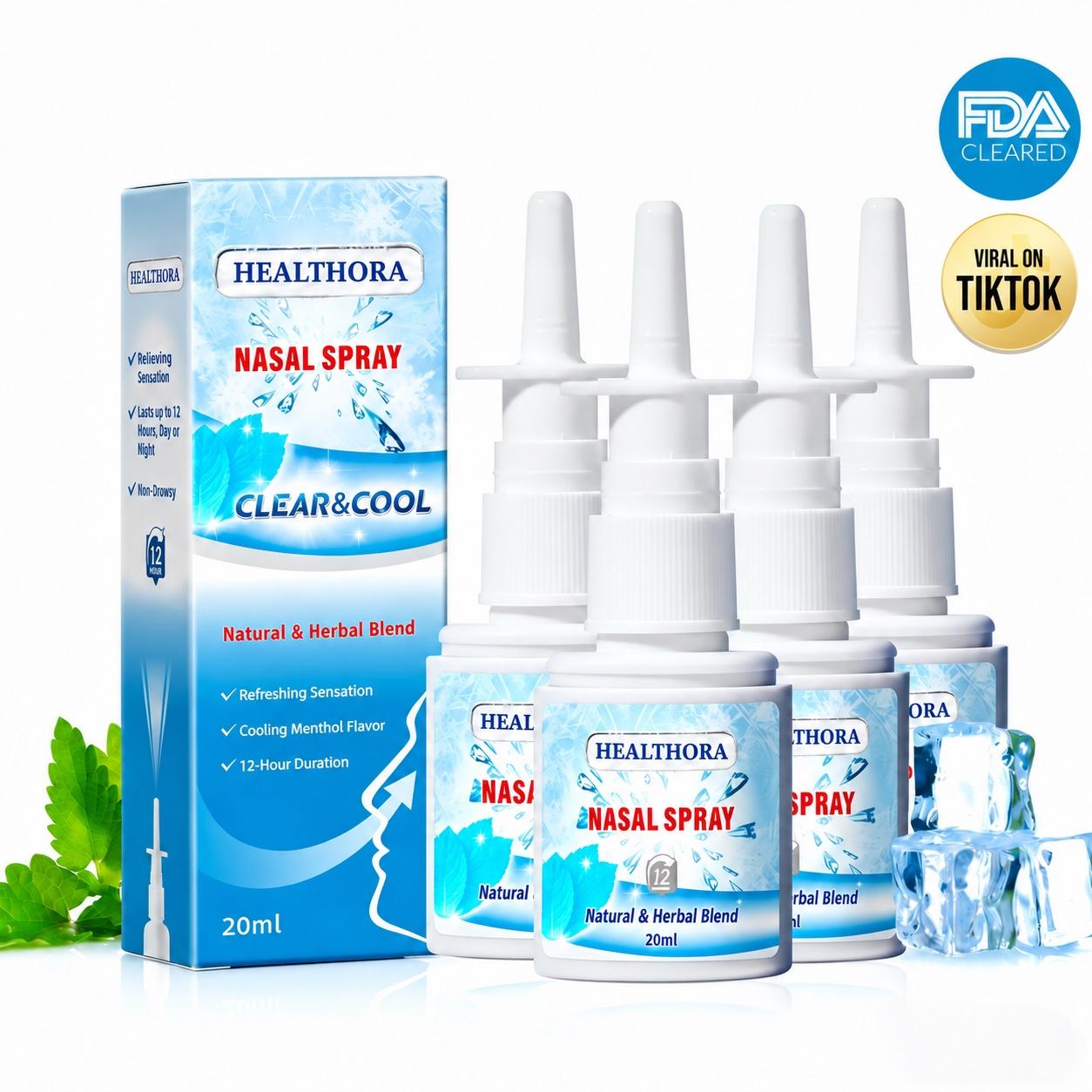
Healthora Nasal Comfort Spray is one of these: a natural and herbal blend with a cooling menthol flavor, made for daily sinus comfort. Its carton rates a use at up to 12 hours, lists every ingredient, and says who should ask a doctor before using it and what it can feel like; the product page repeats all of it.
Signs you are using a spray too much
- The relief lasts less and less, and the blocked feeling between doses is worse than when you started: the pattern of rebound congestion from a decongestant.
- You have used a decongestant spray daily for more than three days.
- Frequent nosebleeds, crusting or a persistently dry, sore lining, which can follow heavy use of several kinds of spray.
- A blockage that has lasted more than three weeks, is on one side only, or comes with facial pain, fever or discoloured discharge: that is a doctor’s question, not a spray’s.
This guide is general information, not medical advice. Read the label of any medicine you take, and ask a pharmacist or doctor about your own situation.