What is pseudoephedrine, and why is it kept behind the counter?
Pseudoephedrine is the oral decongestant sold behind the pharmacy counter. How it works, who should not take it, and why you have to show ID.
By the HEALTHORA team · 16 April 2024 · 7 min read
What is pseudoephedrine?
Pseudoephedrine (soo-doh-eh-FED-rin) is a nasal decongestant you swallow. It is the active ingredient in the original Sudafed and in many store-brand "sinus" and "cold and sinus" products, on its own or combined with a pain reliever or an antihistamine. It comes as regular tablets, liquids, and extended-release tablets that last 12 or 24 hours.
It is approved in the US for the temporary relief of nasal and sinus congestion caused by the common cold, hay fever, and other upper-respiratory allergies. It does not treat the cold or the allergy itself; it eases the blocked feeling while the underlying cause runs its course or is treated some other way.
How does pseudoephedrine work?
A stuffy nose is mostly swelling. When the lining of your nose reacts to a virus or an allergen, the small blood vessels in it widen and the tissue puffs up, which narrows the space air has to pass through. Mucus adds to it, but the swelling is what makes the nose feel blocked.
Pseudoephedrine is a sympathomimetic: it acts on the same receptors as adrenaline. In the nose that tightens the widened blood vessels, the tissue shrinks back, and the airway opens. Because it travels through the bloodstream rather than being sprayed where it is needed, it also reaches the rest of the body, which is where its side effects come from.
A regular tablet starts working within about half an hour and lasts four to six hours. The extended-release versions release the same ingredient slowly over 12 or 24 hours.
Why do you have to show ID to buy it?
Pseudoephedrine can be used to make methamphetamine. The Combat Methamphetamine Epidemic Act of 2005, signed into law in March 2006 with its retail rules in force from that September, did not make pseudoephedrine prescription-only, but it did move it behind the counter and put limits on how it is sold. Under the federal rules, a store must:
- keep pseudoephedrine products behind the pharmacy counter or in a locked cabinet, out of customer reach;
- check government-issued photo ID and record the sale in a logbook the buyer signs;
- sell no more than 3.6 grams of pseudoephedrine to one person in a day, and no more than 9 grams in 30 days.
For a standard 30-count box of 120 mg extended-release tablets, that daily limit works out to one box. Some states add stricter rules of their own, including purchase tracking across pharmacies, so the exact limit can differ from one state to another. The paperwork is about the ingredient, not about you: a pharmacist asking for ID is following the law, not judging the purchase.
How much pseudoephedrine can you take?
Your package label is the only instruction that applies to the product in your hand, because combination products vary. The standard figures for adults and children 12 and over on single-ingredient products are:
- Regular tablets or liquid: 60 mg every 4 to 6 hours, and no more than 240 mg in 24 hours.
- 12-hour extended-release: one 120 mg tablet every 12 hours, no more than two in 24 hours.
- 24-hour extended-release: one 240 mg tablet once a day.
Extended-release tablets must be swallowed whole; crushing, chewing or splitting them releases the whole dose at once. Liquids should be measured with the cup or syringe in the box, not a kitchen spoon. Children under 12 have lower doses, and children under 4 should not be given over-the-counter decongestants at all; ask a pharmacist or doctor.
Who should not take pseudoephedrine?
Because it tightens blood vessels and stimulates the nervous system everywhere, not only in the nose, pseudoephedrine is a poor fit for some people. Ask a doctor or pharmacist before taking it if you have:
- high blood pressure or heart disease;
- diabetes;
- thyroid disease;
- glaucoma;
- trouble urinating because of an enlarged prostate;
- a narrowing or blockage anywhere in the digestive tract (for the 24-hour tablets, which pass through whole).
Do not take it if you are taking a monoamine oxidase inhibitor (MAOI), a class of antidepressant and Parkinson’s medicine, or have taken one in the last two weeks; the combination can raise blood pressure dangerously. If you are pregnant or breastfeeding, ask a doctor first. If you are not sure whether something you take is an MAOI, a pharmacist can tell you in a minute.
What are the side effects of pseudoephedrine?
The common ones are the ones you would expect from a mild stimulant: restlessness, nervousness, trouble sleeping, headache, nausea, and a faster heartbeat. Taking the last dose of the day earlier in the evening helps with the sleep part. Less commonly it raises blood pressure, which is why the conditions above matter.
Get medical help straight away for a pounding or irregular heartbeat, severe dizziness, or an allergic reaction such as swelling or difficulty breathing. In an overdose, call Poison Control or emergency services.
Pseudoephedrine vs phenylephrine: what is the difference?
When pseudoephedrine moved behind the counter, most of the boxes left on the open shelf switched to phenylephrine (the "PE" in Sudafed PE and similar names). It works on the same receptors, but it is largely broken down in the gut and liver before it reaches the bloodstream, so very little of a swallowed dose gets to the nose.
In September 2023 an FDA advisory committee reviewed the evidence and concluded that oral phenylephrine at the labeled dose is no better than a placebo for congestion. In November 2024 FDA proposed removing it from the list of allowed over-the-counter oral decongestants. That proposal covers tablets and liquids only; phenylephrine nasal sprays were not part of it. Check the current status before relying on either, because the rule-making may have moved on since this was written.
The practical upshot: if you want the oral decongestant that the evidence supports, it is the one you have to ask the pharmacist for.
Where does a non-medicated spray fit?
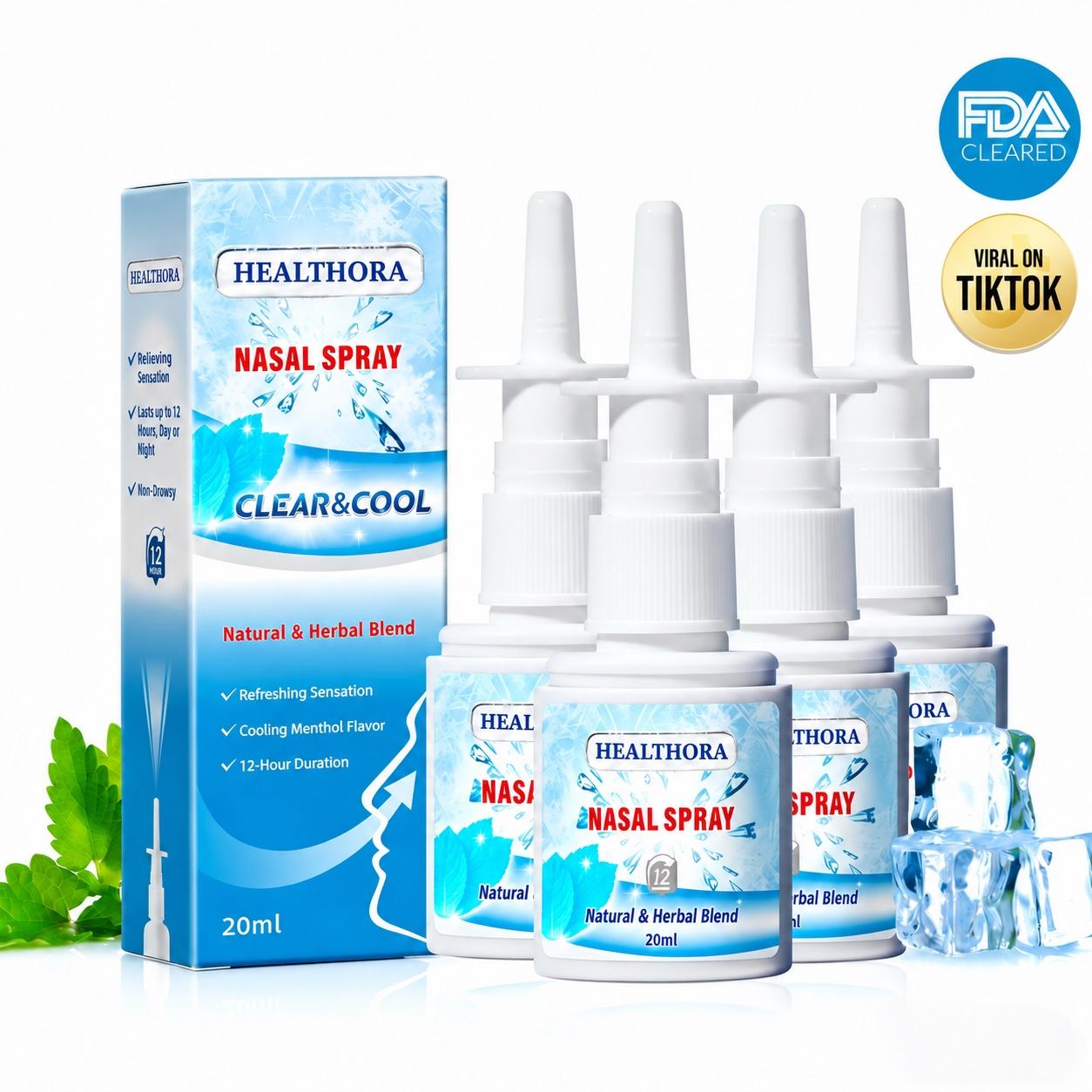
Not everyone wants, or can take, a systemic decongestant, and nobody wants to be taking one every day. Healthora Nasal Comfort Spray is not a decongestant medicine: it contains no pseudoephedrine, no phenylephrine and no oxymetazoline. It is a natural and herbal blend with a cooling menthol flavor, made for daily sinus comfort, with its ingredients, uses and warnings printed in full on the carton and repeated on its product page.
If a pharmacist has told you that pseudoephedrine is not for you, or you are simply looking for something to keep in a bag for everyday stuffiness rather than a cold, read the carton and ask whether a non-medicated spray suits you.
This guide is general information, not medical advice. Read the label of any medicine you take, and ask a pharmacist or doctor about your own situation.
Sources
- MedlinePlus: Pseudoephedrine (drug information)
- FDA: Legal requirements for the sale and purchase of drug products containing pseudoephedrine
- FDA Drug Info Rounds: Combat Methamphetamine Epidemic Act (the 3.6 g and 9 g limits)
- FDA press release, 7 November 2024: proposal to end use of oral phenylephrine as an OTC nasal decongestant
- FDA: Key information about nonprescription oral phenylephrine